From web and mobile apps to AI and cloud — we transform ideas into powerful digital products that drive measurable business growth.
Projects Delivered
Happy Clients
Presence in countries
Satisfaction Rate
SaaS, portals, dashboards & e-commerce at scale
iOS, Android & cross-platform excellence
Chatbots, predictions & intelligent automation
CI/CD, AWS, Kubernetes & Docker pipelines
Companies that trust SyneLogic to power their technology.
End-to-end digital solutions tailored to your business needs — from idea to deployment and beyond.
Custom web apps, enterprise dashboards, SaaS platforms, and e-commerce solutions built with modern stacks.
Native iOS, Android, and cross-platform apps delivering seamless user experiences across all devices.
Predictive analytics, intelligent chatbots, computer vision, and automation to supercharge operations.
CI/CD pipelines, container orchestration, and cloud infrastructure on AWS, Azure, and GCP.
Secure, high-performance data migration, ETL pipelines, and third-party API integrations.
Growth-focused strategies including technical SEO, content marketing, and performance campaigns.
Connected device ecosystems, real-time sensor dashboards, edge computing, and smart automation platforms.
From idea validation to roadmap planning — we help you build the right product, for the right users, at the right time.
SyneLogic is a Pune-based digital engineering company focused on delivering scalable and intelligent technology solutions. We partner with startups, SMBs, and enterprises to build products that matter.
Our agile-first team of engineers, designers, and strategists ensures fast delivery, transparent communication, and results that consistently exceed expectations.
Technical depth, client-first culture, and a track record that speaks for itself.
Senior developers with deep expertise across multiple tech stacks and domains.
Iterative sprints, continuous feedback, and fast time-to-market.
Strategy, design, development, deployment, and support — all under one roof.
Future-proof systems designed to grow with your business.
On-time delivery without any compromise on quality — guaranteed.
Regular updates, clear timelines, and no hidden surprises.
We bring deep domain expertise to every project — understanding the unique challenges, compliance needs, and user expectations of each industry.
Marketplaces, D2C stores, inventory systems, and omnichannel retail platforms.
LMS platforms, e-learning apps, virtual classrooms, and student management systems.
Policy management, claims processing, underwriting tools, and customer portals.
Core banking, mobile wallets, investment platforms, and regulatory compliance tools.
EHR systems, telemedicine platforms, lab management, and health data analytics.
Property portals, CRM tools, virtual tours, and listing management platforms.
We adapt to how you work. Choose the model that fits your project, team, and budget — or mix and match across phases.
We build your dedicated team and infrastructure, operate it to maturity, then transfer full ownership to you. Ideal for long-term capability building.
Defined deliverables, fixed price, clear deadlines. Perfect for well-scoped projects where predictable budgets and timelines matter most.
Pay for actual hours worked. Best when requirements evolve rapidly or you need a fast start with a flexible, iterative approach to delivery.
Extend your existing team with pre-vetted engineers, designers, and specialists — on-demand, at scale. Full talent provisioning end-to-end.
Pre-screened with technical assessments
Seamless fit into your team & tools
Ongoing management & tracking
Documentation & transfer built in
Not sure which model suits you? Let's talk and find the right fit.
Discuss Engagement OptionsA glimpse of the digital products we've built for clients across industries.
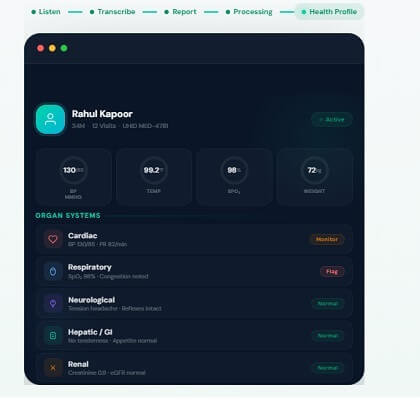
AI-powered documentation & analysis of patient records, OPD workflows, appointments, and billing. From solo practice to multi-department hospital.
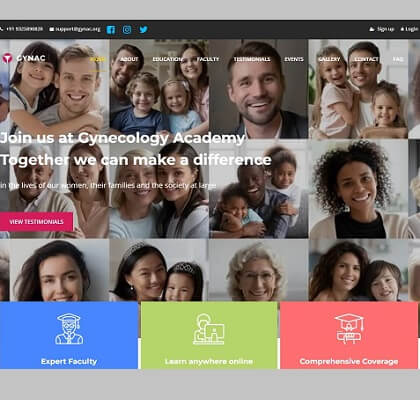
Top rated - Online Medical Education & Training
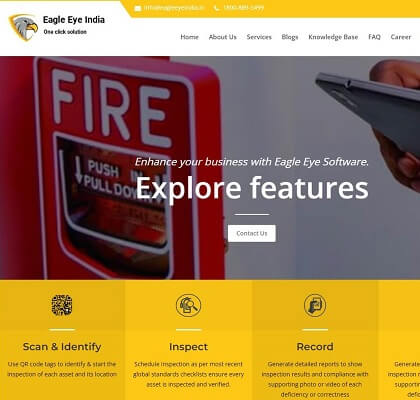
AI powered - Fire Safety Inspection & Maintenance
Projects Delivered
Clients Worldwide
Client Satisfaction
Presence in countries
Real feedback from businesses we've helped transform with technology.
"SyneLogic completely transformed our patient management system. Delivered on time with excellent communication throughout. Highly professional."
"The e-commerce platform handles thousands of orders daily without a glitch. Their technical depth and commitment to quality is outstanding."
"From AI integration to cloud migration — SyneLogic handled everything seamlessly. They're not just vendors, they're true technology partners."
"Incredible team with deep technical expertise. The mobile app has a 4.8-star rating on the App Store. Absolutely loved working with SyneLogic."
Let's discuss your idea and create a roadmap to make it reality.
Contact Us TodayComprehensive digital solutions designed to accelerate growth and technology transformation.
We design and build high-performance web applications — from complex SaaS platforms and enterprise dashboards to e-commerce stores and customer portals. Modern frameworks, cloud-native architecture, maximum scalability.
From consumer apps to enterprise mobility solutions — we build mobile applications that are fast, secure, and delightful to use. Cross-platform development reduces cost while maintaining native-quality performance.
We help businesses harness the power of AI — from predictive models and NLP-based chatbots to computer vision and recommendation engines. Our ML engineers design, train, and deploy models that deliver measurable ROI.
We architect, automate, and manage cloud infrastructure so your team can focus on shipping features. From CI/CD pipelines to Kubernetes orchestration, we ensure your systems are fast, secure, and highly available.
We handle complex data migrations, ETL pipelines, and system integrations with zero data loss and minimal downtime. Whether moving to the cloud or connecting siloed systems, we build robust, auditable pipelines.
Our digital marketing team drives organic and paid growth through technical SEO, content strategy, PPC campaigns, and conversion rate optimization. We focus on measurable outcomes and long-term brand authority.
Let's craft the perfect technology plan for your business.
Get Free Consultation150+ projects across healthcare, fintech, e-commerce, education, and more.
The Gynecology Academy is a specialized e-learning platform online education platform for medical professionals focused on women’s health and related specialties providing certification in gynecology-related fields.
High-performance marketplace supporting 200+ vendors with real-time inventory, analytics dashboard, and mobile-first storefront.
AI-powered BI tool with natural language querying, predictive models, and auto-generated reports integrating 20+ data sources.
Secure mobile banking with biometric auth, UPI integration, smart budgeting tools, and real-time transaction notifications.
Feature-rich LMS with video courses via Vimeo, adaptive quizzes, certificates, and a multi-role admin panel for 10,000+ students.
AI-powered property recommendations, virtual tours, map-based search, and a full seller CRM dashboard.
Cloud-native logistics and fleet management with real-time tracking, route optimization, and automated dispatching for 2,000+ vehicles.
LLM-powered support chatbot with product recommendations, order tracking, and seamless handoff to human agents.
On-demand vehicle service booking with technician tracking, digital service history, and auto parts e-commerce integration.
Let's discuss how we can turn your idea into a successful digital product.
Start a ProjectA passionate team of engineers, designers, and strategists on a mission to build exceptional digital products.
SyneLogic was founded in Pune with a clear mission: bring world-class digital engineering to businesses of all sizes. What started as a team of five passionate developers has grown into a full-service technology company.
We've worked with early-stage startups and enterprises undergoing digital transformation — bringing the same dedication and craftsmanship to every engagement.
To empower businesses through scalable, intelligent, and beautifully crafted digital solutions — delivering real value at every stage of the product lifecycle.
To become India's most trusted digital engineering partner — known for technical excellence, transparent collaboration, and transformative business impact.
We raise the bar on every project, sprint, and line of code.
We treat every client's problem as our own.
We embrace new technologies to stay ahead.
Open communication, honest timelines, no surprises.
Continuous learning — for our team and clients.
As a client or as a team member — we'd love to hear from you.
Thoughts on technology, engineering, product, and growth from the SyneLogic team.
From AI-assisted code generation to intelligent testing pipelines — the way software is built is evolving rapidly. Here's what it means for businesses and engineering teams.
A practical comparison for teams choosing their container orchestration strategy based on scale, complexity, and budget.
After building 30+ cross-platform apps, here's our honest take on which framework wins and when.
Battle-tested optimizations from real production applications — from query caching to OPcache tuning.
What we learned building retrieval-augmented generation systems for enterprise clients — the hard way.
UX patterns we've tested across 50+ dashboards — the mistakes everyone makes and the fixes that actually work.
From OWASP Top 10 to modern auth vulnerabilities — a practical security checklist for web developers.
Subscribe to our newsletter for monthly articles on engineering, product, and growth.
Subscribe NowArtificial intelligence is no longer a feature you bolt onto a product — it's becoming the default way software is conceived, built, and maintained. In 2026, the impact is tangible: AI-assisted tools are compressing development cycles, shifting what developers spend their time on, and raising the bar for what businesses expect from their technology partners.
Three years ago, AI's role in software development was largely limited to autocomplete tools like GitHub Copilot. Today, the full-stack has AI woven into every layer. At SyneLogic, we've integrated AI-assisted development into most of our projects — and the productivity gains are real.
The average engineer on our team spends roughly 35% less time on boilerplate and repetitive code. That time moves into architecture, edge case handling, and — critically — understanding user needs more deeply. It's not replacing engineers; it's making them significantly more effective.
This is the most common question we get from clients. The honest answer: trust it conditionally, verify it rigorously. AI-generated code is impressive for standard patterns — CRUD operations, data transformations, UI scaffolding. Where it struggles is nuanced business logic, security-critical paths, and domain-specific edge cases.
AI is an incredibly fast first-draft writer. The best engineers we have are exceptional editors — they know exactly what to change, what to delete, and what to rewrite entirely.
Our internal policy: AI-generated code goes through the same review process as any other code. No exceptions. In practice, this means AI speeds up the volume without lowering the quality bar.
Test generation is where we've seen some of the most dramatic gains. Tools can now generate unit test suites from function signatures, infer edge cases from function behavior, and even write integration tests from API specifications. On a recent healthcare project, our testing coverage went from 62% to 89% with roughly half the manual effort previously required.
If your technology partner isn't using AI-assisted development tooling in 2026, you're paying for slower delivery. Ask them specifically about their testing pipeline automation and code review practices around AI-generated code.
For product managers and business stakeholders, AI in the development pipeline has a direct implication: your MVP timelines are shorter than they were 18 months ago. Features that used to take 3 sprints are routinely being shipped in 2. This doesn't mean cutting corners — it means the best teams are shipping more thoughtfully, faster.
It also changes how you should evaluate technology partners. The differentiator is no longer raw speed — it's judgment. Who is making the right decisions about what to build, how to test it, and how to maintain it over time?
AI-native applications require different architectural thinking. Latency budgets look different when you have LLM calls in critical paths. Data pipelines need to be designed with retraining in mind. Security models need to account for prompt injection and adversarial inputs.
// Example: Wrapping LLM calls with proper error handling + fallback
async function getAIRecommendation(context, fallbackFn) {
try {
const response = await llm.complete({ prompt: buildPrompt(context), timeout: 3000 });
return parseResponse(response);
} catch (err) {
console.warn('LLM call failed, using fallback:', err.message);
return fallbackFn(context); // deterministic fallback
}
}Embrace AI tooling in your development workflow, but build a culture of rigorous review. The teams winning right now are those using AI as a force multiplier for engineering judgment — not a replacement for it. Invest in the quality of your prompts, your review practices, and your testing infrastructure.
The question is no longer "should we use AI?" — it's "how do we use it responsibly, and how do we measure whether it's actually improving outcomes?"
Container orchestration is no longer optional for teams running production workloads. But choosing between Kubernetes and Docker Swarm remains one of the most debated infrastructure decisions we encounter when starting new projects. After managing both in production across dozens of client environments, here's our honest assessment.
Kubernetes is a full container orchestration platform with a steep learning curve and enormous capability. Docker Swarm is a simpler, native Docker clustering solution that does less, but is dramatically easier to operate.
Choose Kubernetes when you have complex, multi-service architectures that need fine-grained traffic control, auto-scaling policies, custom resource definitions, or multi-cloud portability. It excels for:
Choose Swarm when you're a smaller team, your application is relatively monolithic or has few services, and operational simplicity is a priority. Real situations where Swarm wins:
We've seen startups burn weeks setting up Kubernetes for applications that would run perfectly on a single well-provisioned VM. Right-sizing your infrastructure decisions is as important as the decisions themselves.
Kubernetes adds real operational overhead. Control plane management, etcd maintenance, certificate rotation, RBAC policies, networking plugins — the list is long. Managed Kubernetes (EKS, GKE, AKS) reduces but doesn't eliminate this burden.
If you have fewer than 8 services and a team under 15 engineers: start with Swarm or even Compose + a single server. You can migrate to Kubernetes when the complexity justifies it — and you'll know when that moment arrives.
Docker Swarm's development has slowed significantly. Docker Inc. has shifted its focus, and the community momentum is firmly behind Kubernetes. For greenfield projects with any meaningful scale ambition, Kubernetes (or a managed variant) is now the default we recommend — but with managed services handling the control plane wherever possible.
We've built over 30 cross-platform mobile apps at SyneLogic — roughly split between Flutter and React Native. After all of that, the answer to "which is better?" is still: it depends. But the context has shifted significantly in 2026, and there are clearer patterns for when each wins.
Flutter is the better choice for most new projects in 2026, especially if you're building UI-heavy applications, games, or need pixel-perfect custom interfaces. React Native remains compelling if your team has strong JavaScript expertise, you need deep web/native code sharing, or you're maintaining an existing RN codebase.
Google's investment in Flutter has been consistent and substantial. The framework's architecture — rendering its own UI via the Impeller engine rather than using native components — gives it a significant performance and consistency advantage:
The New Architecture (Fabric + JSI) has meaningfully addressed RN's longstanding performance criticisms. If your team is JavaScript-first, React Native integration into an existing web product is compelling:
On our last 5 Flutter projects, we averaged 23% faster UI development compared to equivalent React Native projects. The widget system, once you internalize it, is remarkably productive.
Consumer apps with rich UI, animations, games: Flutter. Enterprise apps with lots of web integration, existing JS teams: React Native. Healthcare or fintech apps needing pixel-perfect compliance and custom widgets: Flutter. Rapid MVP with a React web team: React Native + Expo.
In 2026, Flutter wins on technical merit for most use cases. React Native wins on team fit and ecosystem integration. Choose based on your team's strengths, not just benchmarks.
Last year we inherited a PHP/Laravel application that was loading in 4.2 seconds. After 3 weeks of systematic optimization work, we brought it to 1.1 seconds. Here are the 10 changes that made the biggest difference, in order of impact.
OPcache stores precompiled script bytecode in memory, eliminating the need to recompile PHP code on every request. Surprisingly, many production deployments we inherit have it either disabled or misconfigured.
; php.ini optimized OPcache settings
opcache.enable=1
opcache.memory_consumption=256
opcache.max_accelerated_files=20000
opcache.validate_timestamps=0 ; disable in production
opcache.save_comments=0Impact on our project: ~35% reduction in TTFB alone.
N+1 queries are the most common performance killer in Laravel applications. We found 23 N+1 issues using Laravel Debugbar. Fixing them with proper eager loading cut database query count from 847 to 34 on the dashboard page.
// Before: N+1 problem
$orders = Order::all();
foreach ($orders as $order) {
echo $order->customer->name; // new query per iteration!
}
// After: eager loading
$orders = Order::with(['customer', 'items.product'])->get();Identify queries that run frequently but whose results don't change often. Cache them in Redis with an appropriate TTL. We cached 12 "hot" queries — the analytics aggregations, product catalog, and permission checks — and saw immediate gains.
Run EXPLAIN on your slow queries. We found 8 tables missing indexes on frequently filtered columns. Adding composite indexes on (user_id, created_at) and (status, updated_at) cut several queries from 800ms to under 10ms.
5. PHP 8.3 upgrade — JIT compiler improvements gave us a measurable boost on CPU-intensive operations.
6. Image optimization pipeline — Serving WebP via Cloudflare with responsive srcset cut median page weight from 3.2MB to 890KB.
7. Horizon queues for async work — Emails, PDF generation, and notifications moved off the request lifecycle entirely.
8. HTTP/2 + CDN — CloudFront for static assets with aggressive cache headers.
9. Session driver → Redis — Swapping file-based sessions for Redis eliminated disk I/O bottlenecks.
10. Lazy loading + code splitting on the frontend — Deferred JS loading and component-level code splitting reduced initial bundle from 1.8MB to 340KB.
Run Laravel Telescope or Debugbar on your staging environment and look at query counts per request. If you're seeing more than 30 queries on a single page load, you almost certainly have N+1 issues worth fixing first.
Retrieval-Augmented Generation (RAG) has moved from an experimental technique to a core pattern in enterprise AI deployments. We've built RAG systems for a healthcare client (medical protocol Q&A), a legal tech startup (contract analysis), and a fintech company (regulatory document search). Here's what we got wrong first, and right eventually.
RAG combines a retrieval system (usually a vector database) with a generative LLM. Instead of asking the model to recall facts from training data, you retrieve relevant context from your own documents and include it in the prompt. The model answers based on what you give it, not what it was trained on.
The most common misconception: RAG is not just "ChatGPT with your documents." The retrieval quality, chunking strategy, and prompt engineering matter enormously. Get them wrong and you get confidently wrong answers.
Our first prototype chunked documents by fixed token count (512 tokens). Answers were bad. The problem: meaningful context was being split across chunks — a question answered across two paragraphs would never be fully retrieved.
The fix: semantic chunking by paragraph with a 15% overlap between adjacent chunks. Retrieval accuracy on our eval set jumped from 61% to 84%.
Vector similarity alone isn't sufficient for most enterprise use cases. A clause from a 2018 contract and a 2024 contract might be semantically identical but legally very different. We added structured metadata (document date, type, author, jurisdiction) and hybrid retrieval (vector + keyword + metadata filters). Precision improved significantly.
We shipped v1 based on subjective "it seems good" testing. This is not how you build production AI systems. We now maintain an evaluation dataset of 200+ question/expected-answer pairs per domain, run RAGAS metrics (faithfulness, answer relevancy, context precision) on every deploy, and gate releases on minimum score thresholds.
# RAGAS evaluation pipeline
from ragas import evaluate
from ragas.metrics import faithfulness, answer_relevancy, context_precision
results = evaluate(
dataset=eval_dataset,
metrics=[faithfulness, answer_relevancy, context_precision]
)
# Gate deployment if any metric drops below threshold
assert results['faithfulness'] >= 0.85, "Faithfulness below threshold"Hybrid retrieval (BM25 + dense vectors), semantic chunking with overlap, rich metadata filtering, reranking with a cross-encoder before the final LLM call, and a deterministic fallback for low-confidence responses. This architecture consistently outperforms naive RAG by 20–40% on precision metrics.
Define your evaluation metrics before writing a single line of RAG code. If you can't measure it, you can't improve it — and you definitely can't ship it to production responsibly.
We've redesigned over 50 SaaS dashboards. Almost every one had the same set of problems. The frustrating part is that most of these issues aren't hard to fix — they're just chronically ignored because everyone is focused on adding more features rather than making existing ones work better.
The classic dashboard sin: 24 KPI cards, 8 charts, 3 tables, and a sidebar full of notifications — all visible the moment you log in. Users face decision paralysis and most of them eventually stop looking at the dashboard entirely.
The fix: Role-based default views. An account manager needs different default widgets than a finance director. Implement user-specific dashboard personalization with sensible defaults per role, and let users customize from there.
A chart without context is just decoration. We see line charts with no benchmarks, bar charts with no targets, and pie charts that fragment data into 11 slices. Every chart on a dashboard should answer a specific question a specific user type is asking.
Before designing any chart, write the question it answers: "Is revenue growing faster this month than last?" "Are we at risk of missing our Q2 target?" If you can't write the question in one sentence, the chart shouldn't be there.
Information without actionability is anxiety-inducing. If a metric is red, what should the user do? Most dashboards show users the problem but not the path forward. The best dashboards include contextual CTAs, drill-down paths, and guided analysis flows that take users from insight to action in as few clicks as possible.
The best dashboard we ever designed had 7 total elements on the default view. The worst had 47. The 7-element one had 3x the daily active usage rate.
Over 40% of our clients' users check dashboards on mobile, often first thing in the morning. Yet most SaaS dashboards are desktop-only designs that "kind of work" on mobile. Design for the mobile-first check-in use case explicitly — a daily summary card, top 3 alerts, and one key trend. Everything else can wait for desktop.
Ask 5 users to show you, without any coaching, what they check first when they log in and what they almost never look at. The answers will tell you exactly what to prioritize and what to remove.
Web application security isn't glamorous, but the consequences of getting it wrong are severe. We've conducted security audits on 30+ applications over the past three years. The same vulnerabilities appear repeatedly — not because developers don't know about them, but because they're easy to overlook under deadline pressure. This checklist is designed to be actionable, not exhaustive.
// BAD: SQL injection vulnerability
$query = "SELECT * FROM users WHERE email = '" . $_POST['email'] . "'";
// GOOD: Parameterized query
$stmt = $pdo->prepare("SELECT * FROM users WHERE email = ?");
$stmt->execute([$_POST['email']]);90% of the breaches we've analyzed exploited vulnerabilities that appear on the OWASP Top 10 list — a list that has existed since 2003. The basics, consistently applied, prevent most attacks.
If you do nothing else from this list, at minimum: use parameterized queries, hash passwords with bcrypt/Argon2, set security headers (CSP, HSTS, X-Frame-Options), and never commit secrets. These four things will prevent the majority of common attacks.
In-depth looks at how we solved real business challenges with technology.
MediCare Hospitals operated across 8 locations with disconnected paper-based systems, leading to missed appointments, duplicate records, and poor patient experience. SyneLogic built a unified patient management portal integrating scheduling, EHR, billing, and doctor dashboards.
↓ Wait Times
Faster Onboarding
System Uptime
Cost Saved/yr
FreshBasket wanted to move from a single-vendor D2C model to a full multi-vendor marketplace connecting 200+ organic food producers directly with consumers in Pune and Mumbai. They needed a platform that could handle flash sales, perishable inventory, and cold-chain logistics.
Monthly GMV
Vendors
Traffic Handled
Avg Page Load
FinVault, a Pune-based NBFC, wanted to launch a consumer mobile banking app with UPI integration, smart budgeting, and biometric security — competing with established players on a startup budget.
Active Users
App Store
UPI Response
Security Breaches
Let's discuss your challenges and build a solution that delivers real impact.
Start a ConversationHave a project in mind? Let's talk. We'd love to learn about your goals.
Whether you have a quick question or want to kick off a project, our team is here and ready.
Wakad, Pune – 411057, MH, India
+91 8600199247
Mon–Fri: 9 AM – 6 PM IST
SyneLogic HQ – Wakad, Pune
18.597° N, 73.778° E · Maharashtra, India
We're always looking for talented engineers, designers, and thinkers who want to build the future.
📎 Click to upload or drag & drop your resume
PDF, DOC, DOCX – Max 5MB
Please read these terms carefully before using our services.
Last updated: January 1, 2026
Welcome to SyneLogic Technologies Pvt. Ltd. ("SyneLogic", "we", "us", or "our"). By accessing our website or engaging our services, you agree to be bound by these Terms of Service.
SyneLogic provides digital engineering services including web development, mobile application development, AI/ML solutions, cloud infrastructure, data migration, and digital marketing. The scope of services for each client engagement is defined in a separate Statement of Work (SOW) or Service Agreement.
Clients are responsible for providing accurate project requirements, timely feedback, and necessary access to systems required for project delivery. Delays caused by the client's failure to provide required materials may affect project timelines and costs.
Upon full payment, clients receive ownership of the custom work product developed exclusively for them. SyneLogic retains ownership of pre-existing frameworks, tools, libraries, and methodologies used in delivering services. Open-source components are subject to their respective licenses.
Invoices are due within 15 days of issuance unless otherwise agreed in writing. Late payments are subject to a 1.5% monthly interest charge. SyneLogic reserves the right to pause work on accounts with outstanding invoices beyond 30 days.
Both parties agree to keep confidential any proprietary information shared during the engagement. This obligation survives the termination of the service agreement for a period of 3 years.
SyneLogic's total liability to any client shall not exceed the total fees paid by that client in the preceding 3 months. We are not liable for indirect, incidental, or consequential damages arising from the use of our services.
SyneLogic warrants that services will be performed professionally and in accordance with industry standards. We provide a 30-day warranty on delivered work for bug fixes. This warranty does not cover new feature requests or changes to requirements.
Either party may terminate an engagement with 30 days written notice. The client is responsible for payment of all work completed up to the termination date. Refunds for unused prepaid services are at SyneLogic's discretion.
These terms are governed by the laws of India, and any disputes shall be subject to the exclusive jurisdiction of the courts in Pune, Maharashtra.
SyneLogic reserves the right to modify these terms at any time. Continued use of our services after changes constitutes acceptance of the revised terms.
For questions about these terms, please contact us at [email protected] or write to: SyneLogic Technologies Pvt. Ltd., Level 4, Baner Business Hub, Baner Road, Pune – 411045.
How we collect, use, and protect your personal information.
Last updated: January 1, 2026
SyneLogic Technologies Pvt. Ltd. is committed to protecting your privacy. This policy explains how we handle information collected through our website and services.
We use collected information to: respond to inquiries and deliver requested services; communicate about project progress and deliverables; send relevant technical and product updates (with your consent); improve our website and service offerings; comply with legal and regulatory requirements.
We do not sell, rent, or trade your personal information. We may share data with trusted service providers (hosting, analytics, payments) who are contractually bound to protect it. We may disclose information if required by law or to protect our legal rights.
Our website uses cookies for analytics and session management. You can control cookie preferences through your browser settings. Disabling cookies may affect some website functionality.
We implement industry-standard security measures including SSL encryption, access controls, and regular security audits. However, no method of transmission over the internet is 100% secure.
We retain personal data for as long as necessary to fulfill the purposes for which it was collected, comply with legal obligations, or resolve disputes. Client project data is retained for 5 years post-project completion.
You have the right to: access personal data we hold about you; request correction of inaccurate information; request deletion of your data (subject to legal obligations); withdraw consent for marketing communications at any time.
Our website may contain links to third-party websites. We are not responsible for the privacy practices of those sites and encourage you to review their policies.
Our services are not directed at individuals under 18. We do not knowingly collect personal information from minors.
For privacy-related questions or to exercise your rights, contact our Data Protection Officer at [email protected].